Overview
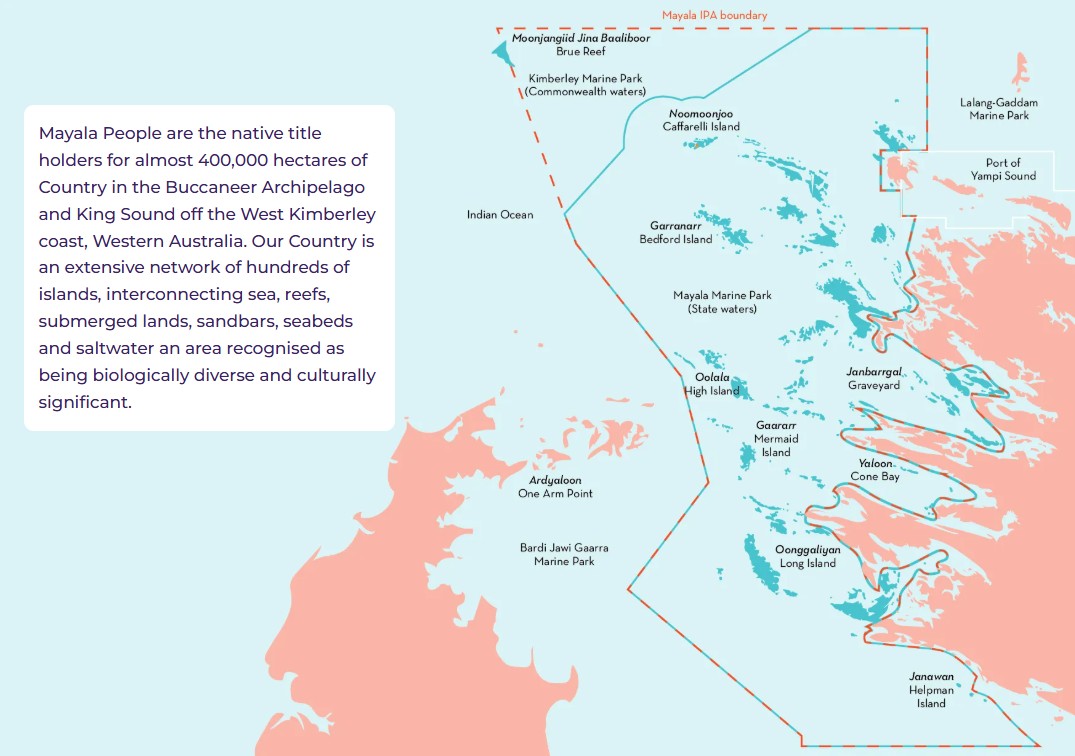
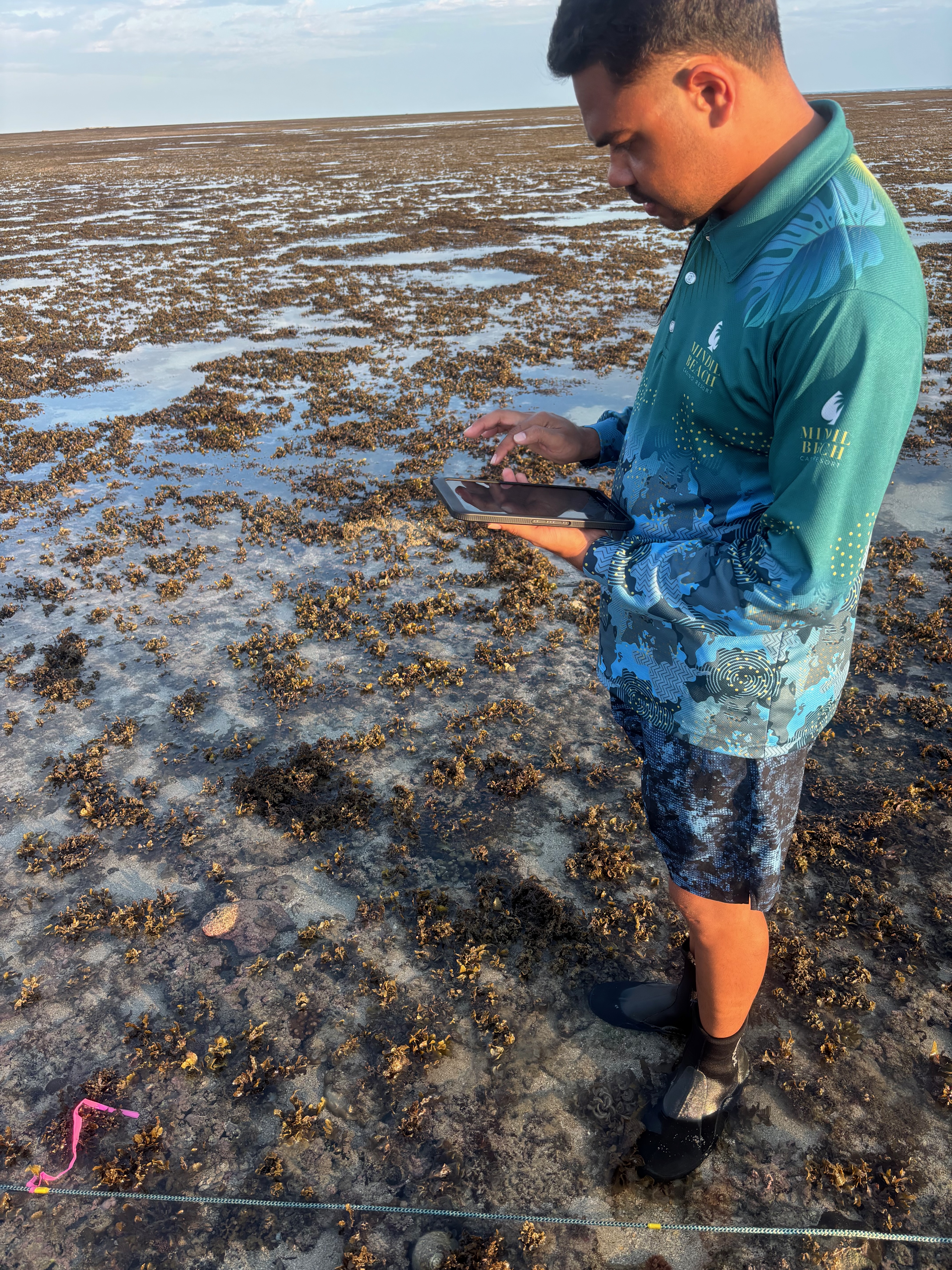
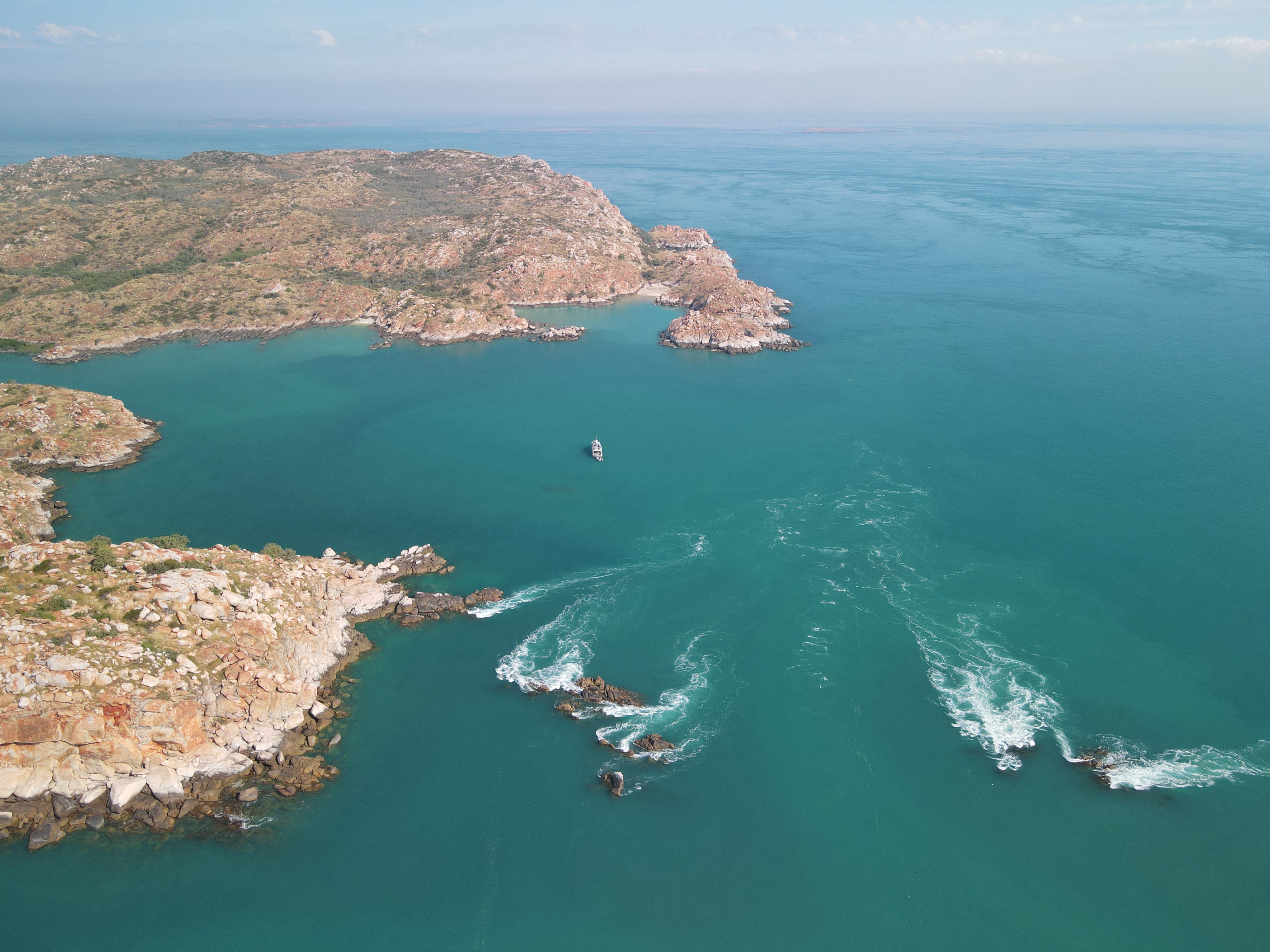
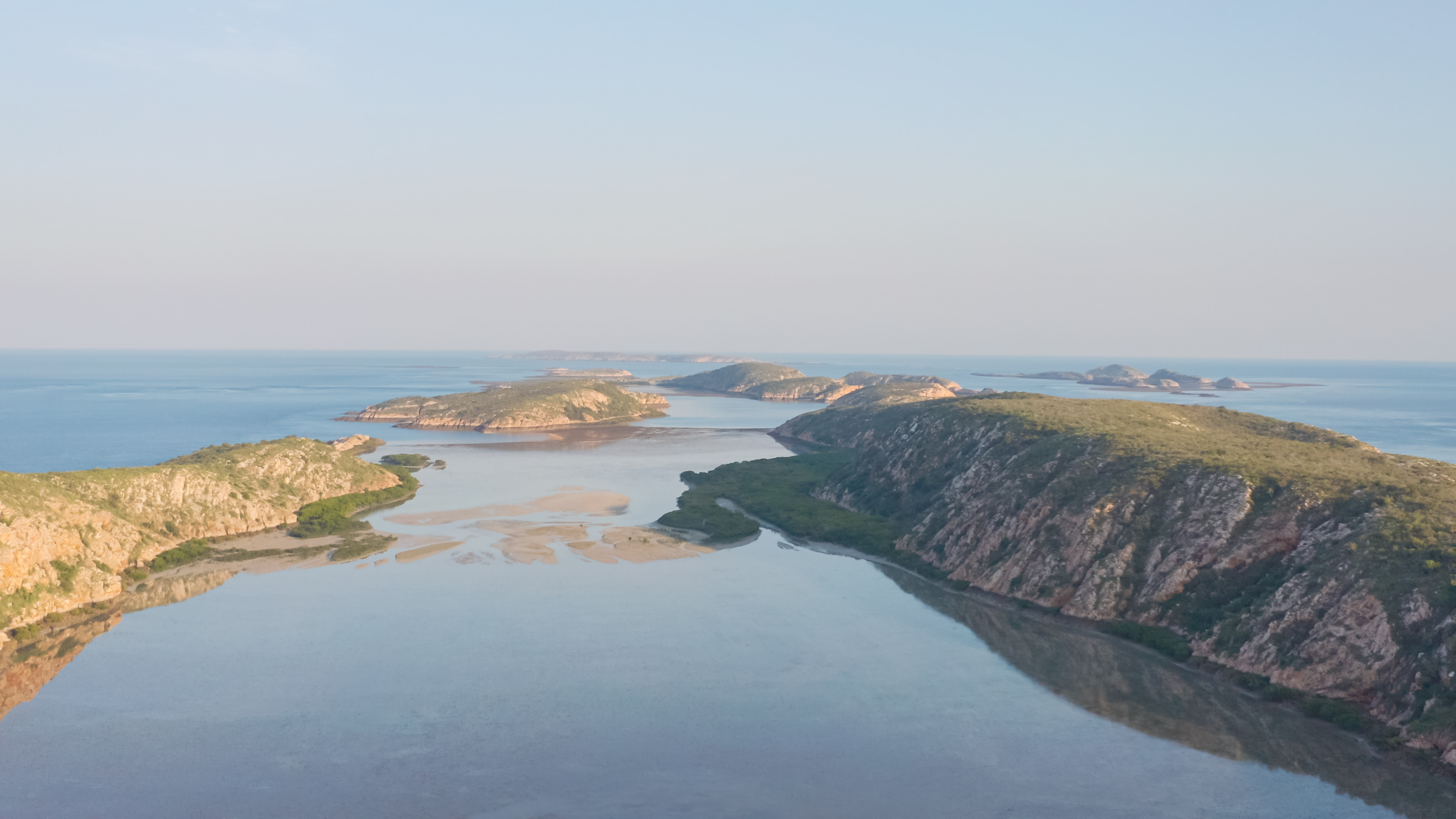
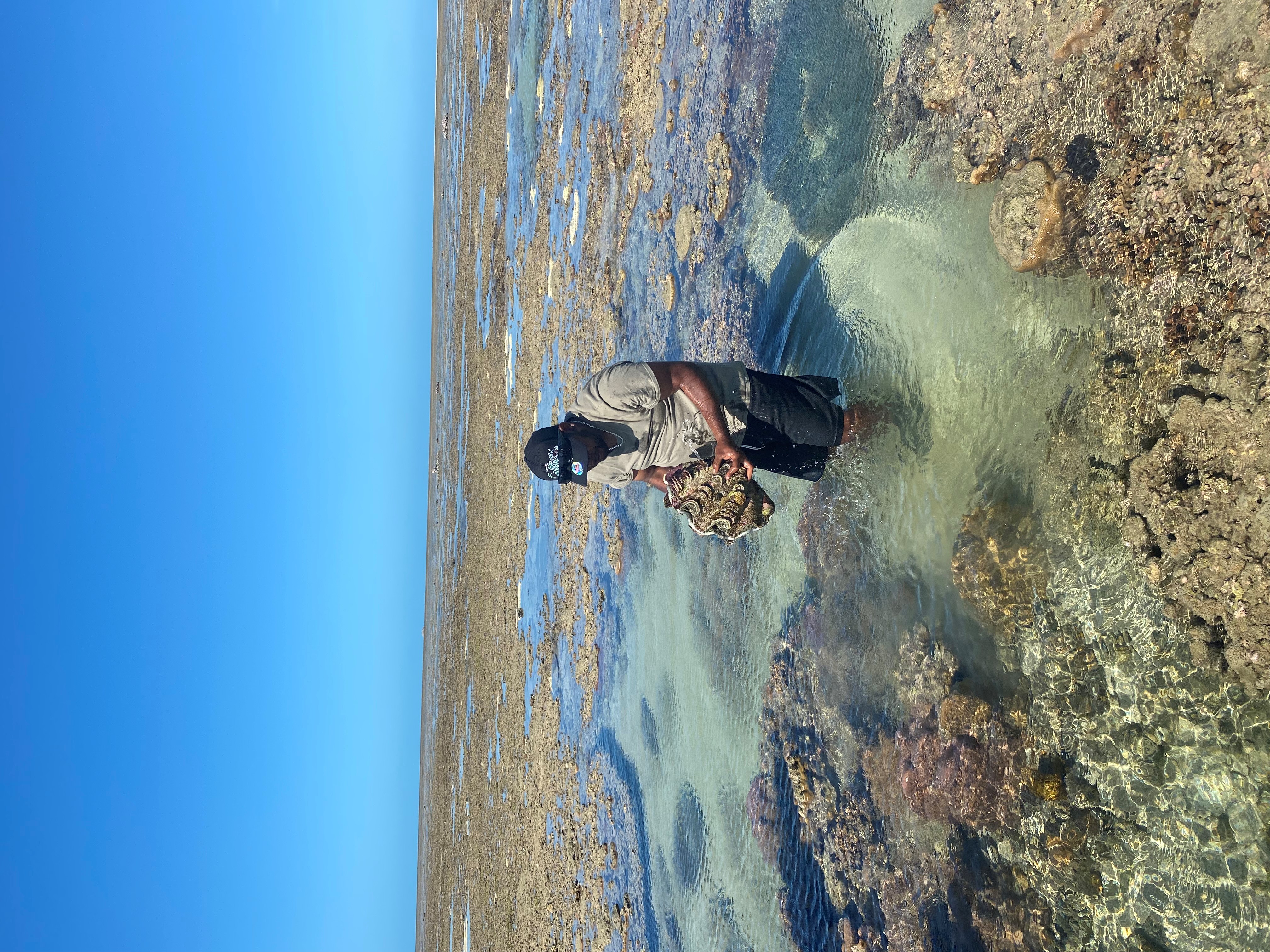
Mayala Country encompasses an extensive network of hundreds of islands across the Buccaneer Archipelago and King Sound, off the West Kimberley coast (WA). It includes interconnected seas, reefs, submerged lands, sandbars, seabeds and saltwater environments, forming a landscape and seascape of exceptional biological diversity and deep cultural significance.
Mayala People hold an enduring responsibility, passed down through generations, to care for Country and ensure it remains healthy, abundant and culturally strong. This responsibility is guided by deep cultural knowledge of Mayala Country, including an intimate understanding of its complex tides and currents—the loo and noomoorr.
Mayala Country supports exceptional biodiversity and largely intact island ecosystems. Its islands are free from feral animals, have relatively few weeds and experience fewer destructive fires, providing important refuges for species threatened on the mainland and increasing resilience to the impacts of climate change. Across its diverse environments, Mayala Country supports significant natural values that are recognised locally, nationally and globally.
The Mayala Country Plan encompasses all of Mayala Baaliboor—Mayala Country. This includes the islands, seas, submerged lands, seabeds and saltwater environments that together form a continuous cultural land- and seascape.
Within Mayala Baaliboor, cultural, social, political and ecological relationships are interconnected and inseparable from Country.
In 2024, Mayala Country was dedicated as an Indigenous Protected Area (IPA), strengthening the recognition and protection of its cultural and environmental values.
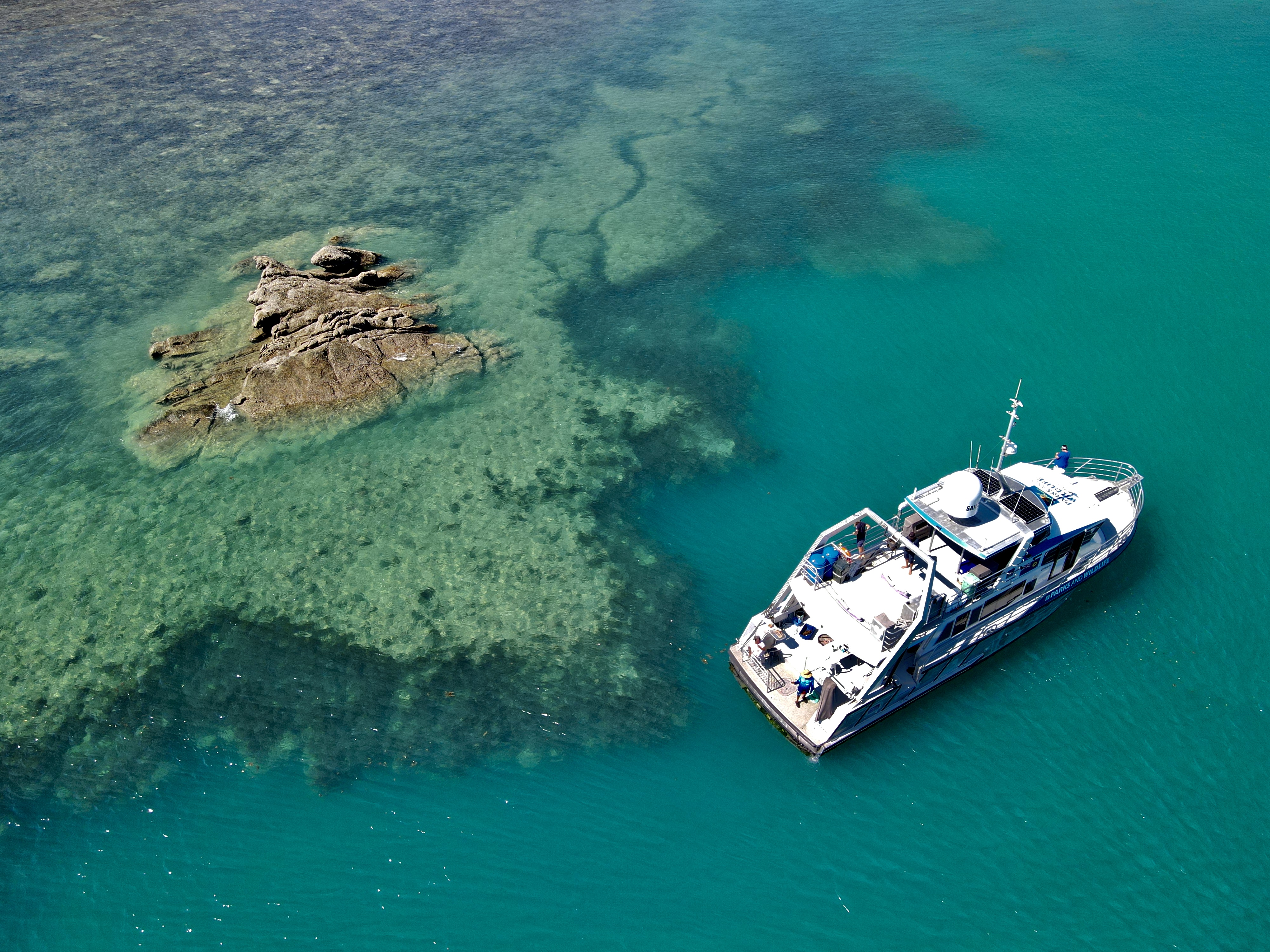
Mayala People are also joint management partners with the Department of Biodiversity, Conservation and Attractions (DBCA) for Mayala Marine Park, which encompasses the state waters within Mayala Country.